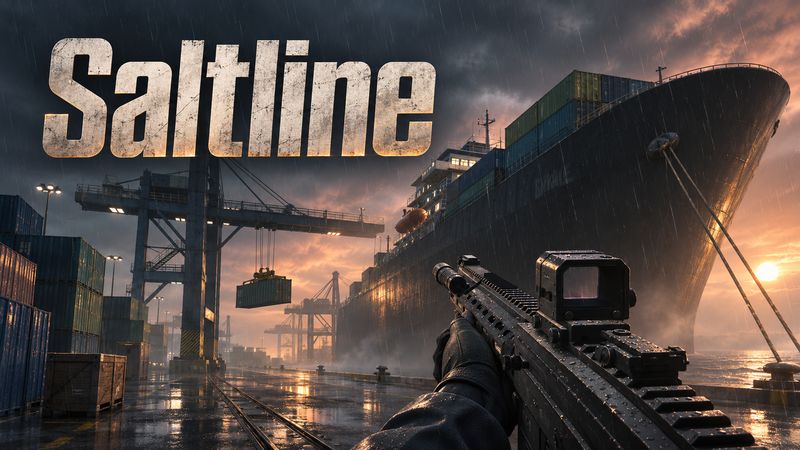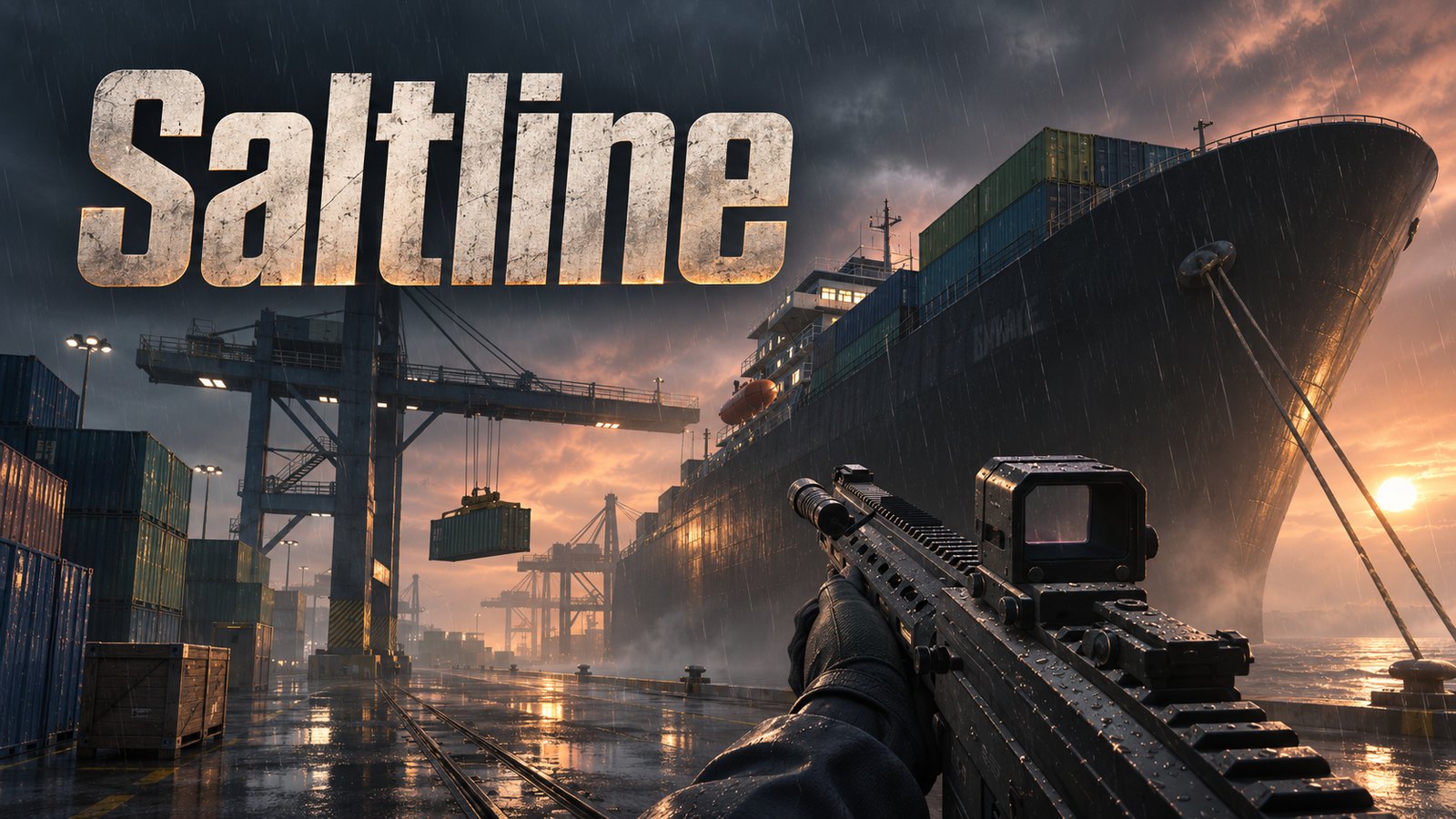
The best Claude Fable 5.2 games from launch week run in a browser and most of them are 3D. Kevin Ngo's What the Water Keeps is built on Three.js. Felix Rieseberg's Saltline generates every model, texture and sound in code. This guide puts together what those builds have in common into a workflow you can follow for your own Three.js game.
What you need
- Access to Claude Fable 5.2. It's in the Claude apps, in Claude Code, and on the API as
claude-fable-5-2. On Pro plans and standard Team seats, Fable can use up to half of your weekly usage limit. On the API it costs $8 per million input tokens and $40 per million output tokens. - An agent harness, not a chat window. For anything bigger than a toy, use Claude Code or another agent that can write files, run a local server and open a browser. The good launch-week games came from runs that lasted hours.
- Node.js and a browser automation tool such as Playwright, so the model can play-test its own game.
Step 1: Pick a small game
The single biggest predictor of a good result is scope. Saltline is one level with one objective. Tidewright starts with one beacon to light. What the Water Keeps is one river.
Write down, in two or three sentences:
- the core action (row a boat, shoot drones, place gears),
- the win or end condition,
- the look you want (dawn light on wet concrete, a painterly night sea).
If your idea needs a menu with ten options, an inventory and a skill tree, cut it down before you prompt.
Step 2: Choose the setup
Two setups work well with Three.js:
No build step. One index.html, an import map pointing to a copy of three.module.js in a vendor/ folder, and plain ES modules in src/. What the Water Keeps is built this way: you can open its source in the browser and see vendor/three/three.module.js and files like src/engine/boat.js. It's easy for the model to reason about and easy to host on any static host.
Vite. If you want TypeScript or npm packages, ask for a Vite project. It adds a build step but the model knows it well.
Avoid asking for a big game engine on top. Three.js plus your own small modules is enough for a browser game, and fewer layers means fewer things to go wrong in an 8-hour run.
Step 3: Set the effort level
Fable 5.2 has five effort levels: low, medium, high, xhigh and max. The API default is high; the Claude apps and Claude Code default to medium.
For a game build:
- Plan and talk through the design at medium.
- Run the long, unattended build at high. Anthropic says most of the model's capability gain is already there at
high. - Try xhigh only for the hardest parts, and only if you can see it helps. It uses many more tokens.
At lower effort levels the model is more likely to stop with a list of what's left instead of doing it. If that happens, tell it plainly to keep going until the game is finished.
Step 4: The prompt
Here is a prompt you can adapt. It follows the patterns that worked in the launch-week games: narrow scope, procedural assets, a performance budget, and self-testing.
Build a complete, polished 3D browser game with Three.js. This project is yours: you decide the structure and you will keep building on it.

GAME
- Concept: [one or two sentences, e.g. "Row a small boat down a river at sunset through three different worlds."]
- Core action: [what the player does every few seconds]
- End: [how a run ends or is won]
- Mood and look: [lighting, colour, weather, art style]
- Scope: one level / one area, finished to a high standard. Depth over breadth.

TECH
- Plain HTML + ES modules, Three.js vendored in /vendor with an import map. No build step.
- Generate all models, textures and sounds in code (geometry, shaders, canvas textures, Web Audio). No downloaded assets.
- Target 60 fps on a mid-range laptop. Add a quality setting (low / medium / high) that changes shadows, resolution and particle counts.
- Controls: keyboard and mouse, plus touch controls on phones.
- A title screen, a pause menu (Esc), and a short controls overlay.

PROCESS
- Commit to git as you go.
- Write a Playwright script that starts a local server, plays the game automatically from start to finish, takes screenshots at key moments, and fails on console errors. Run it after each major change and look at the screenshots yourself.
- Keep working until the game is finished and the play-test passes. Ordinary errors and failing tests are not reasons to stop: fix them.
- When done, write a README with how to run it and what you'd improve next.
Fill in the brackets. Keep the rest. The line saying the project is yours is there on purpose: Anthropic's prompting guide for Fable 5.2 says the model restructures and fixes code more freely when the prompt says the codebase is its own.
Step 5: Let it run, then play it yourself
A good build takes hours. Lex Toumbourou's Aiden's Revenge ran overnight in Claude Code, and the agent wrote a bot that played all twelve stages in a headless browser and checked the screenshots. Saltline ran for about 8 hours.
When it's done, play it yourself on a slow machine and a phone. The two problems that came up most with the launch-week games, in player comments and in our own testing, were performance (stutters, frozen tabs) and controls (mouse capture not working inside embedded views). Send those back as specific feedback: "On a 2019 MacBook Air the frame rate drops below 20 when the rain starts. Make the low quality setting turn off the rain particles and halve the shadow map."
What it costs
On the API, the cost of a run is mostly how long it lasts:
- Saltline: about 2.7 million output tokens and 445 million input tokens (mostly cached), roughly $550.
- Aiden's Revenge: Lex estimates about 340 million tokens, most read from cache, plus separate costs for images and audio.
Prompt caching does the heavy lifting. Cache reads on Fable 5.2 cost $0.20 per million tokens, 40 times less than fresh input. A harness that keeps the conversation history stable, as Claude Code does, gets most of that discount automatically.
If the bill matters more than the last 10% of quality, see our Fable 5.2 vs Opus 5.5 comparison. Opus 5.5 costs half as much per token.
Publish it
A static Three.js game can go on GitHub Pages, Cloudflare Pages, Vercel or Netlify for free. You can also share it as a public Claude artifact, the way Felix shared his games.
Then submit it to VibeGamer. We list every playable game made with Claude Fable 5.2 in our Fable 5.2 games roundup; for inspiration before you start, play the 18 best Claude Fable 5.2 3D games.